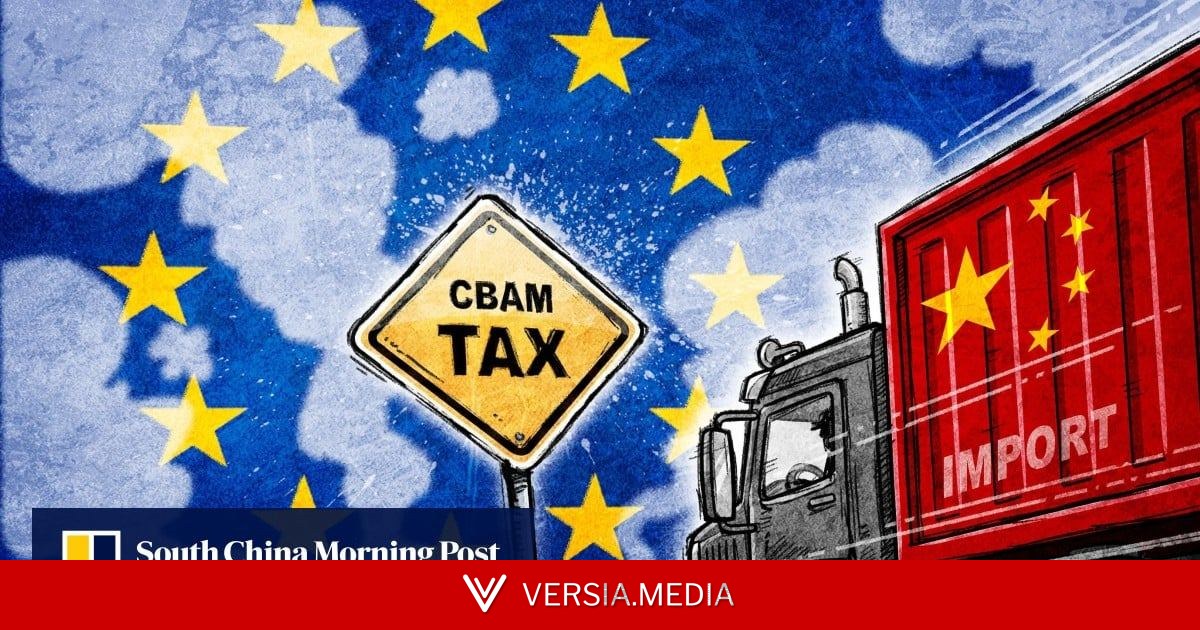
The system is placing significant new compliance pressures on China’s steel industry, with smaller producers that utilize greener technology frequently bearing the heaviest burden.
As trade frictions between Beijing and Brussels intensify, Chinese companies operating in the European Union have been compelled to navigate a precarious balancing act: boosting their foothold in a lucrative market while contending with increasing regulatory obstacles and swift geopolitical changes. In the opening installment of this three-part series, we examine a complex new EU carbon tariff system that has left business owners perplexed.
Neil Miao has been shipping metal hardware to Europe for years. However, earlier this year, his purchase orders started including a fresh document that risked disrupting the transactions.
It was an intricate, multi-sheet spreadsheet requiring extensive rows of technical details—from precise factory coordinates to the carbon intensity of upstream materials. Miao’s small enterprise in Hebei province in northern China lacked the capability to track, or often even grasp, these metrics.
Yet that did not matter to the firm’s German customer. Miao was informed that unless the form was submitted, the shipment would not pass European customs.
Miao is one of hundreds of thousands of global manufacturers scrambling to adjust to the European Union’s Carbon Border Adjustment Mechanism (CBAM)—a carbon tariff system that began its implementation phase in January.
The new framework aims to curb “carbon leakage” by ensuring that any goods entering the European Union face the same carbon-related expenses as domestically produced items. But in China, many producers argue that the policy is generating vast amounts of bureaucracy while frequently falling short of its intended objectives.